Harmonic Pedal: Examples
To play the examples, please press the "Play" button
How The Harmonic Pedal Works
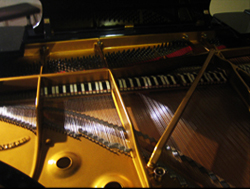
The Resonance Harmonique is easy to recognize :
it allows in the same time the dampening of the released keys.
· The harmonic resonance sounds with all the strings, enabling at the same time an articulated or staccato play.
· The Resonance, the same of with the 3rd damper pedal.
· Mixing these Resonance with harmonic resonance
can give a few effects, as the harmonic Sostenuto :
you can mainten a chord in Resonance, while the further notes are played staccato in harmonic resonance.
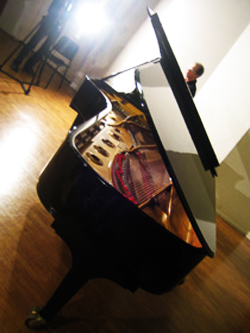
See Videos exemples on YouTube :
http://www.youtube.com/watch?v=nAOvGraQv28&feature=plcp
Lexical Harmonic Pedal Marks :

Harmonic resonance + = half way pedal pressing. Dampers are coming back on the strings at the key release.
 Harmonic resonance - = complete pedal releasing. All the dampers are coming back on the strings.
 Resonance + = complete pedal pressing. All the dampers let the strings free.
 Resonance - = complete pedal releasing. All the dampers are coming back on the strings.
 Resonance become Harmonic = pedal half released in remanence. The notes played before this mark are staying in resonance until the complete releasing of the pedal. The notes played after this mark are dampered at the releasing of the keys.
 Resonance is not more harmonic = coming from remanence, going to resonance by the complete pedal pressing. After this mark, all the dampers are reset.